Hair loss is one of the most emotionally charged health concerns for both men and women. In clinical practice, one question comes up repeatedly: “Is Testosterone causing my hair loss?”
The answer is not as simple as yes or no.
Testosterone plays a powerful role in hair growth, skin health, muscle strength, mood, and overall vitality. Yet, the same hormone is often blamed for scalp hair thinning and baldness. What most people don’t realize is that Testosterone itself is rarely the real culprit. The true driver lies in how the body processes Testosterone—and how your genes respond to that process.
This article explains the relationship between Testosterone hair growth, Testosterone and hair loss, and low Testosterone hair loss in a clear, evidence-based way, so you can understand what’s happening in your body and what can realistically be done about it.
Testosterone – The Masculine Hormone Explained
What Is Testosterone?
Testosterone is a primary androgen hormone present in both men and women, though in very different amounts. It is responsible for many essential bodily functions, including:
- Development of facial and body hair
- Maintenance of muscle mass and bone density
- Regulation of libido and energy levels
- Influence on mood and cognitive function
- Contribution to skin thickness and oil production
In men, Testosterone levels are significantly higher and play a major role in physical development during puberty and adulthood. In women, Testosterone is present in smaller amounts but is still crucial for hair health, metabolism, and hormonal balance.
From a medical standpoint, Testosterone is not a “bad hormone.” In fact, healthy levels are essential for overall wellbeing.
Different Types and Forms of Testosterone
Testosterone exists in several forms within the body:
- Bound Testosterone, attached to proteins like SHBG
- Free Testosterone, which is biologically active
- Converted forms, such as DHT
When people take Testosterone as part of hormone therapy or supplements, it can be delivered through injections, gels, patches, or oral formulations. Regardless of the source, Testosterone follows the same metabolic pathways once inside the body—and this is where hair health becomes relevant.
Impact of Testosterone on Hair and Skin
Impact of Testosterone on Hair Growth
Testosterone plays a paradoxical role in hair growth. It stimulates hair growth in some areas while contributing to hair loss in others.
- Encourages facial hair development
- Increases body hair thickness
- Supports hair density in areas not genetically sensitive
However, on the scalp—particularly the temples and crown—Testosterone can indirectly contribute to hair thinning if it converts into DHT and the follicles are genetically sensitive.
This explains why two people with similar Testosterone levels can have completely different hair outcomes.
Impact of Testosterone on the Skin
Testosterone also affects the skin by:
- Increasing oil (sebum) production
- Thickening the skin layers
- Influencing acne development
Increased oil production can sometimes worsen scalp inflammation, which may indirectly contribute to hair shedding if left unmanaged.
Testosterone Hair Growth Patterns in Men and Women
Effect of Testosterone on Hair Growth in Males
In men, Testosterone drives:
- Beard growth
- Chest and limb hair development
- Voice deepening
At the same time, scalp hair follicles—especially those at the front hairline and crown—may be genetically programmed to react negatively to DHT, not Testosterone itself.
This is why men with full beards can still experience scalp hair loss.
Effect of Testosterone on Hair Growth in Females
Women produce Testosterone in smaller amounts, primarily from the ovaries and adrenal glands. When levels become imbalanced, women may experience:
- Thinning scalp hair
- Increased facial hair
- Widening of the hair part
Conditions like PCOS often involve elevated androgen activity, making hair changes one of the earliest visible signs.
DHT – The Hormone Behind Hair Loss
What Is DHT?
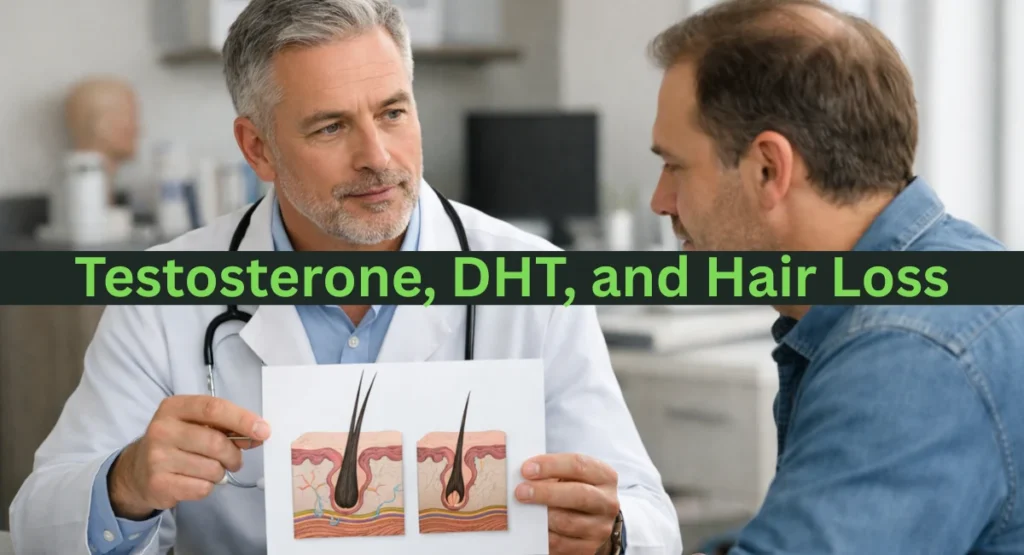
DHT (dihydrotestosterone) is a by-product created when the enzyme 5-alpha reductase converts Testosterone into a more potent androgen.
DHT binds strongly to hair follicle receptors and can:
- Shorten the hair growth cycle
- Shrink hair follicles over time
- Produce thinner, weaker hair strands
Eventually, follicles may stop producing visible hair altogether.
Hair Loss and the DHT Connection
DHT does not affect all hair equally. Only follicles that are genetically sensitive to DHT will miniaturize. This explains why:
- The sides and back of the scalp usually retain hair
- Baldness follows predictable patterns
- Hair transplants work by relocating resistant follicles
DHT and Other Health Conditions
Beyond hair loss, DHT also influences:
- Prostate enlargement
- Sebaceous gland activity
- Skin texture
This is why treatments targeting DHT must be medically supervised.
Genetics – The Driving Factor Behind Hair Loss
It’s Your Genes, Not Just Hormones
One of the most important facts patients need to understand is this:
Hormones trigger hair loss only when genetics allow it.
You inherit DHT sensitivity from both sides of your family. Even moderate Testosterone levels can lead to hair loss if genetic sensitivity is high.
Shape and Pattern of Baldness
- Male pattern hair loss typically affects the hairline and crown
- Female pattern hair loss causes diffuse thinning without full bald patches
These patterns are diagnostic clues used by doctors to identify androgen-related hair loss.
Androgenic Alopecia in Men and Women
Symptoms in Men
- Receding temples
- Thinning crown
- Gradual progression over years
Symptoms in Women
- Central scalp thinning
- Reduced hair volume
- Minimal hairline recession
The Relationship Between Low Testosterone and Hair Loss
Can Low Testosterone Cause Hair Loss?
Yes, low Testosterone hair loss is real, though it works differently.
Low Testosterone can:
- Disrupt the hair growth cycle
- Increase hair shedding
- Reduce hair shaft thickness
This type of hair loss is often diffuse and potentially reversible.
Does Low Testosterone Mean Low DHT?
Not necessarily. Some individuals maintain high DHT levels even when Testosterone is low, due to increased enzyme activity.
Does Hair Loss from Low Testosterone Grow Back?
If addressed early and properly, hair loss caused by hormonal deficiency often improves, especially when follicles remain alive.
Testosterone Replacement Therapy (BRT) and Hair Loss
How Testosterone Therapy Impacts Hair All Over the Body
Testosterone therapy can:
- Increase facial and body hair
- Strengthen existing scalp hair in some individuals
- Accelerate hair loss in genetically sensitive scalps
What to Expect on Testosterone Therapy
- Initial shedding phase is common
- Hair changes stabilize within months
- Long-term outcome depends on genetics and DHT control
When Hair Growth on Testosterone Is Undesirable
Some individuals experience unwanted hair growth, which can often be managed through dosage adjustment and adjunct treatments.
Does Testosterone Cause Hair Loss? (Common Questions)
Does Testosterone Replacement Cause Hair Loss?
It can unmask genetic hair loss, but it does not create new baldness patterns.
Do Testosterone Supplements Cause Hair Loss?
Unregulated supplements may increase DHT conversion unpredictably.
Does High Testosterone Cause Hair Loss?
High Testosterone alone does not—DHT sensitivity does.
Is Balding a Sign of Low or High Testosterone?
Neither. Balding reflects follicle sensitivity, not hormone levels.
Will My Hair Grow Back If I Stop Testosterone?
Stopping Testosterone may reduce further loss but does not reverse genetic baldness.
Will Testosterone Change My Hair Growth Pattern?
Yes, it can enhance facial/body hair and influence scalp density.
DHT Blockers and Hair Loss Management
How DHT Blockers Work
They reduce the conversion of Testosterone into DHT by inhibiting 5-alpha reductase.
Types of DHT Blockers
- Finasteride
- Dutasteride
- Spironolactone (commonly for women)
Effects and Limitations
- Slow or stop hair loss
- Partial regrowth possible
- Must be taken consistently
Effective Treatments for Hair Loss
Medical Treatments
- Minoxidil
- Finasteride
- Dutasteride
Advanced Therapies
- Platelet-rich plasma (PRP) injections
Nutritional Factors
Hair health depends on iron, vitamin D, zinc, protein, and overall metabolic balance.
Other Contributing Factors to Hair Loss
Age and Hormonal Shifts
Chronic Health Conditions
Lifestyle Stress and Sleep
Environmental Exposure
Hair loss is often multifactorial, not hormonal alone.
Dispelling Common Myths About Testosterone and Baldness
Myth: High Testosterone Causes Baldness
Myth: Supplements Always Cause Hair Loss
Myth: Hair Loss Is Irreversible
Truth is more nuanced—and more hopeful.
How to Tell If Your Hair Is Thinning
- Increased shedding
- Reduced ponytail thickness
- Visible scalp
Early detection leads to better outcomes.
How to Prevent Hair Loss While Taking Testosterone
- Monitor hormone levels
- Control DHT
- Support nutrition and scalp health
How to Get Started with Hair Loss Treatment Today
- Professional diagnosis
- Personalized treatment plan
- Regular follow-up
Conclusion
Testosterone is not the enemy of your hair. Genetics, DHT activity, and overall health determine the outcome. Whether dealing with low Testosterone hair loss or concerns about Testosterone therapy, early evaluation and targeted treatment can preserve hair and confidence.
If you address the problem early and correctly, hair loss does not have to be inevitable.
Frequently Asked Questions (FAQs) on Testosterone and Hair Loss
1. Does Testosterone cause hair loss?
Testosterone itself does not directly cause hair loss. Hair loss occurs when Testosterone is converted into DHT (dihydrotestosterone) and the hair follicles are genetically sensitive to it. If your follicles are not sensitive to DHT, even high Testosterone levels may not lead to hair loss.
2. Is hair loss a sign of high or low Testosterone?
Hair loss is not a reliable indicator of either high or low Testosterone levels. Many men with normal or even low Testosterone experience hair loss due to genetic sensitivity to DHT, while others with high Testosterone maintain full scalp hair.
3. Can low Testosterone cause hair loss?
Yes, low Testosterone hair loss is possible. Low levels can disrupt the normal hair growth cycle, leading to increased shedding, thinning, and reduced hair density. This type of hair loss is often diffuse and may improve with proper hormonal treatment.
4. Does low Testosterone mean low DHT?
Not always. Some individuals continue to produce relatively high DHT levels even when Testosterone is low due to increased activity of the 5-alpha reductase enzyme. This is why hormonal testing is important before treatment.
5. Will hair loss from low Testosterone grow back?
Hair loss caused by low Testosterone can often improve if treated early and if hair follicles are still active. Once follicles are permanently miniaturized or inactive, regrowth becomes unlikely.
6. Does Testosterone replacement therapy cause hair loss?
Testosterone replacement therapy does not directly cause hair loss, but it can accelerate genetically programmed hair thinning by increasing DHT levels. This is why some patients notice increased shedding after starting therapy.
7. Do Testosterone supplements cause hair loss?
Unregulated or excessive Testosterone supplements may increase DHT conversion and trigger hair loss in genetically susceptible individuals. Medical supervision is strongly recommended to minimize this risk.
8. Will my hair grow back if I stop taking Testosterone?
Stopping Testosterone may slow further hair loss, but it does not usually restore hair already lost due to genetic baldness. In some cases, shedding related to hormonal imbalance may improve after discontinuation.
9. Does high Testosterone cause baldness?
High Testosterone alone does not cause baldness. Baldness occurs due to DHT sensitivity and genetics, not Testosterone levels themselves.
10. What is the role of DHT in hair loss?
DHT binds strongly to scalp hair follicles and causes them to shrink over time. This shortens the hair growth cycle and eventually leads to thinner hair and permanent follicle inactivity in genetically sensitive areas.